I’m writing this from the Milken Institute Global Conference in LA.
Yesterday I briefed business leaders, politicians, public and private sector executives on our latest work with the Milken Institute — Bridging the Technology Advancement Gap: A New Consensus for the AI Era — which we released to the press today. This is our seventh year on the Listening Project together, and it feels like some of the most important work we’ve rolled out to date.
We surveyed 2,001 American adults, 1,280 American workers, and 502 business leaders at the VP+ level from $2B+ revenue companies. We didn’t ask them what they thought about AI in the abstract.
We asked what’s actually happening inside their companies. Inside their careers. Inside their heads.
What came back is a story about two Americas, not red and blue this time, but corner office vs. cubicle. And the gap between them might be the most important number in business right now.
Two Groups, One Economy. Completely Different Realities.
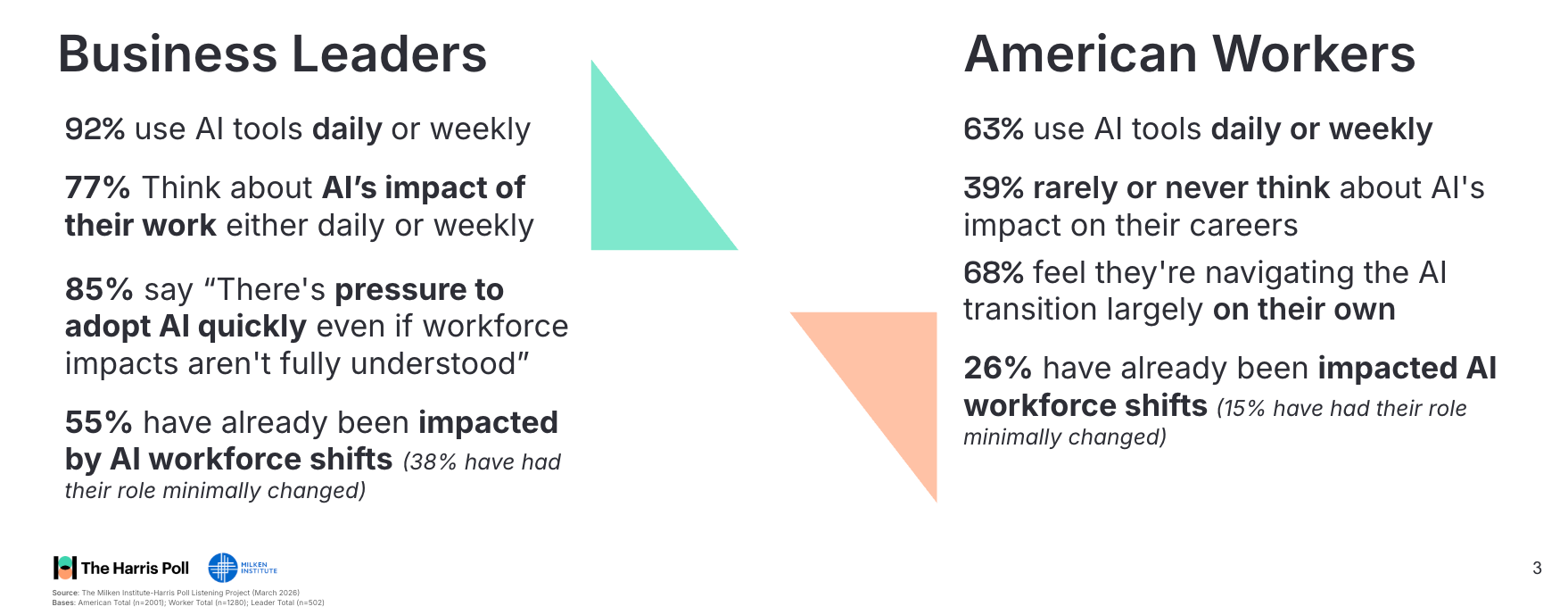
Business leaders have been eating AI for breakfast, lunch, and dinner for the past three years and it shows. They use AI tools daily, they think about AI’s impact on their work, and their roles have already been reshaped by it. They’ve sat through the keynotes, deployed the pilots, restructured the teams. They live inside the AI transition.
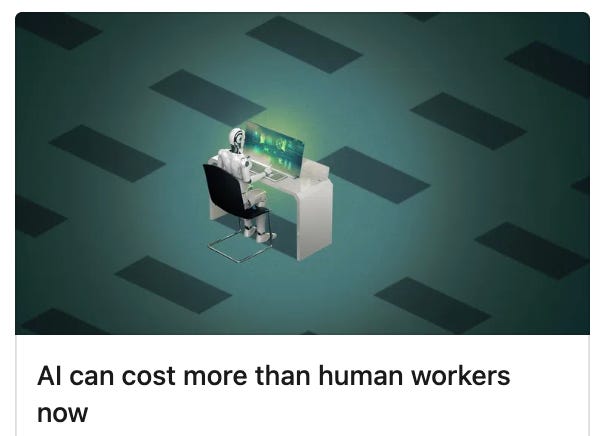
The spending tells the story as Axios reports AI can now cost companies more than human workers, with Uber's CTO already blowing through his full 2026 AI budget on token costs alone and worldwide IT spending expected to hit $6.31 trillion this year.
As Nvidia's VP of applied deep learning Bryan Catanzaro told Axios: the cost of compute for his team is "far beyond the costs of the employees."
Let that rewire your brain for a second. We've entered an era where the machines cost more than the people and the investment is going to the machines anyway.
Meanwhile, American workers are living in a different reality.
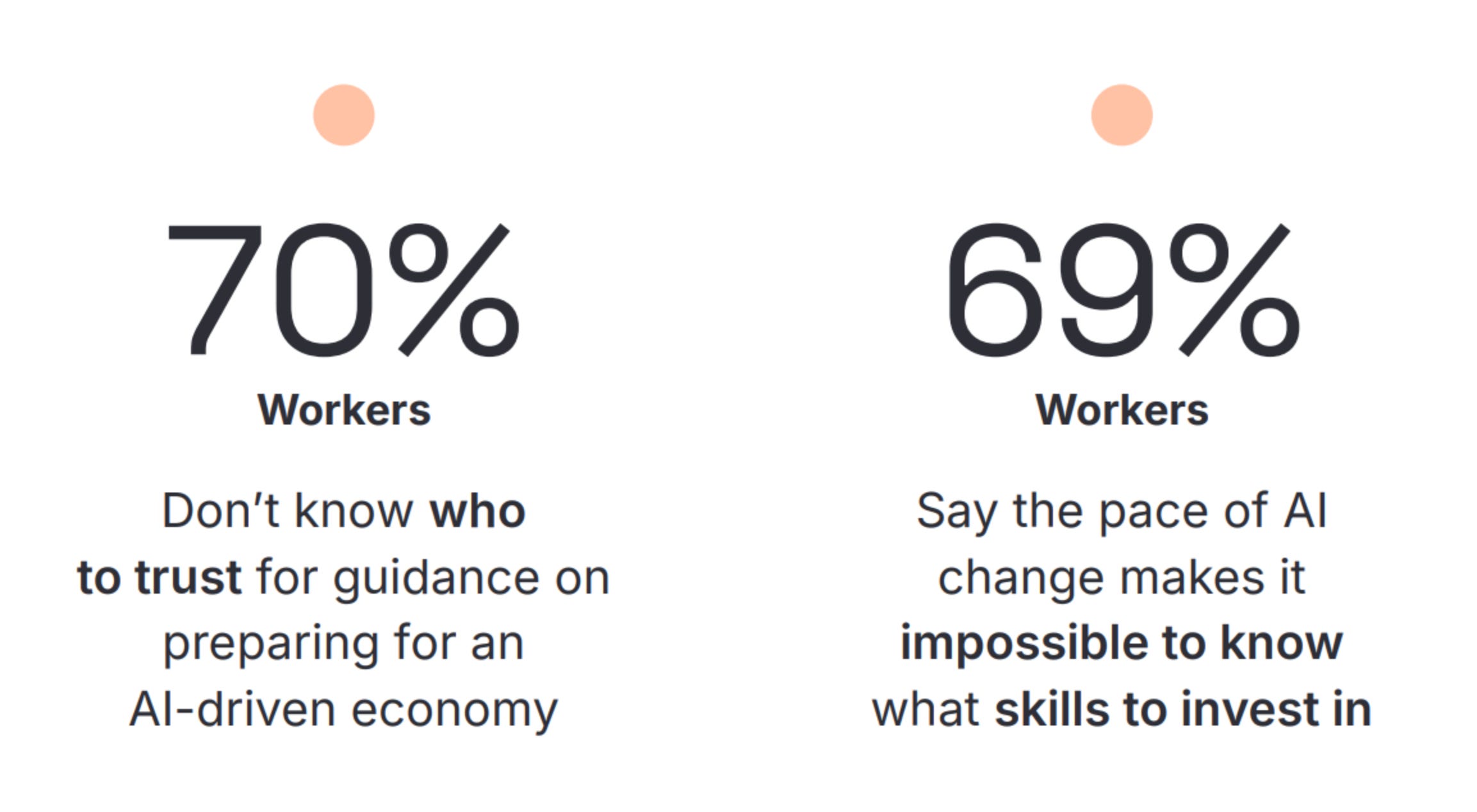
American Workers know AI is coming but they don’t know who to trust, where to invest their resources, and 68% say they’re navigating the AI transition largely on their own.
Think about that. 👀
Two-thirds (68%) of the American workers are figuring out the BIGGEST economic shift of their lifetime WITHOUT a guide, a plan, or a conversation with their boss.
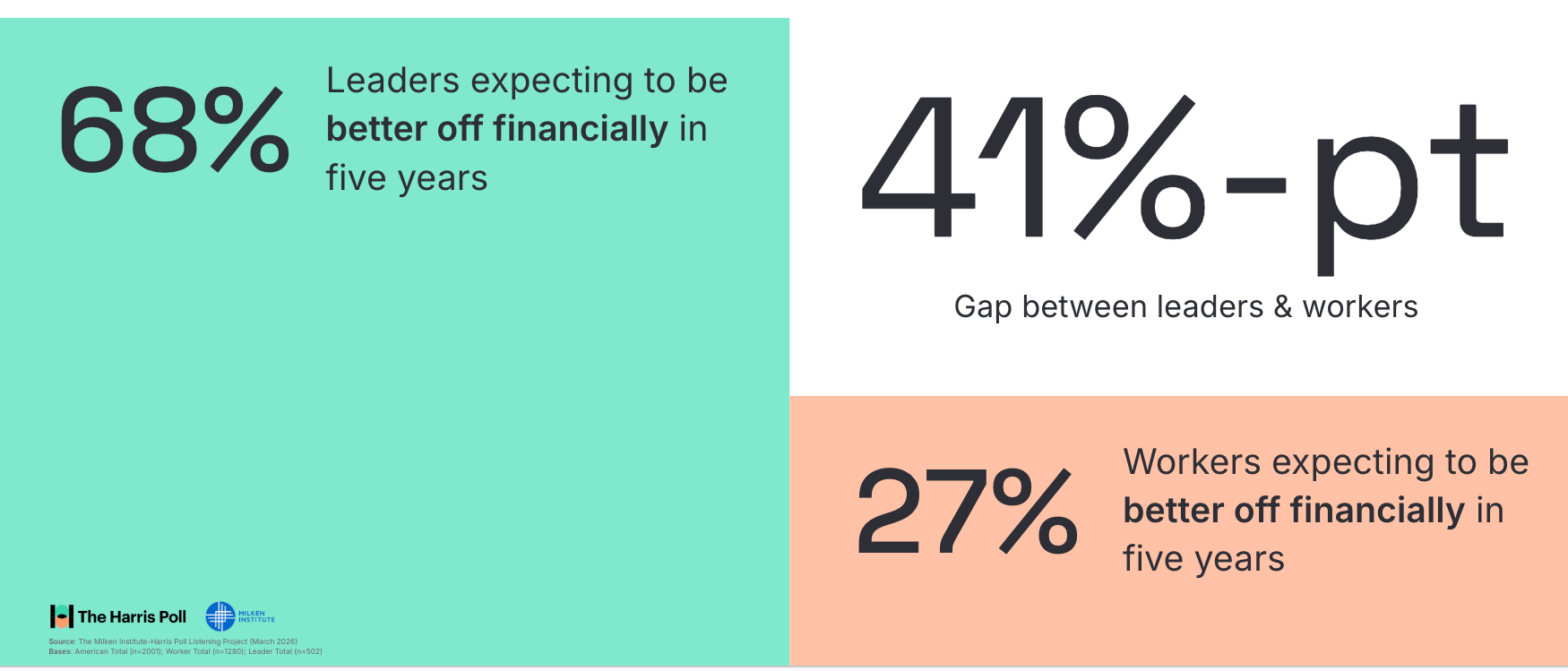
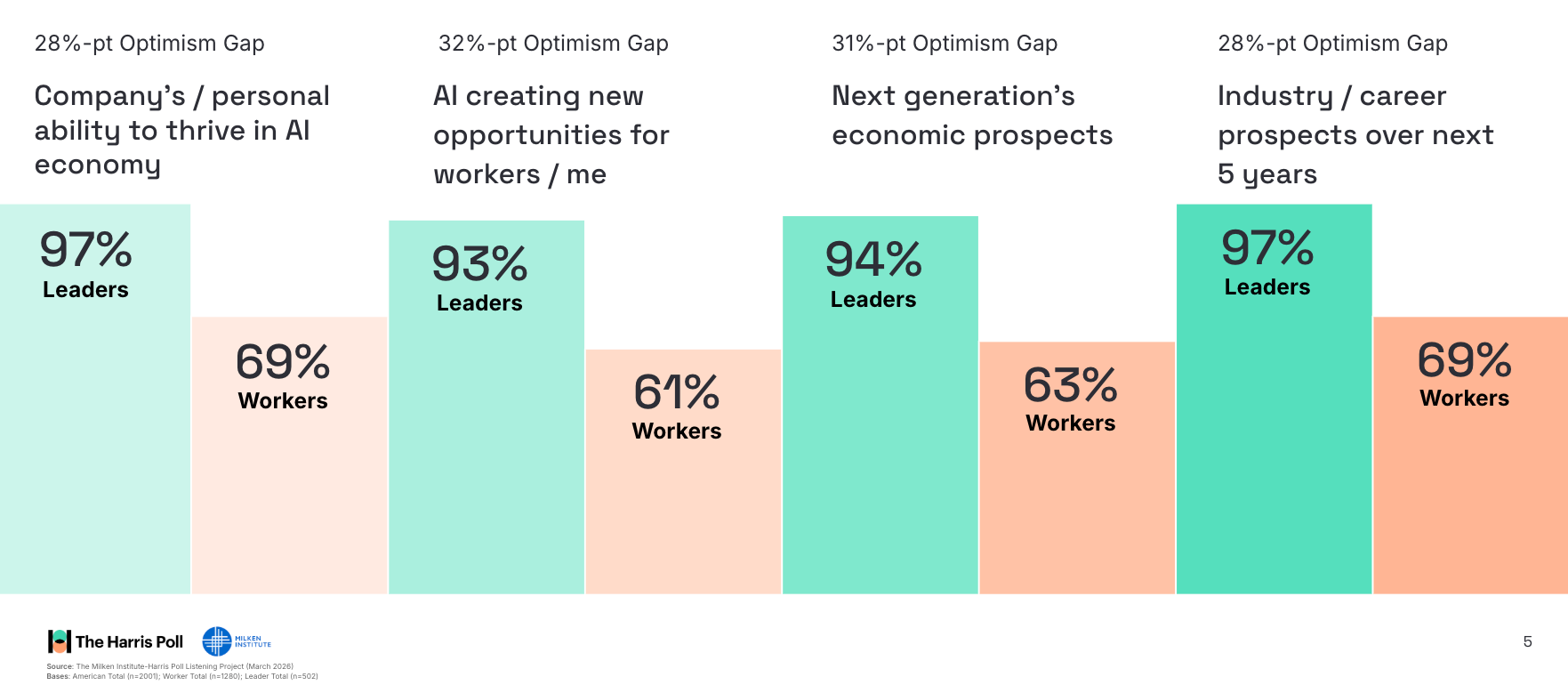
And the optimism gap is staggering.
That’s a 41-point chasm between the people making the decisions and the people living with the consequences.
Leaders see opportunity. Workers see a cliff, but there is an opportunity to build that optimism — if you bring the American Worker along the journey.
But Here’s The Reality: AI Washing Is Rampant
We Aren’t As Far Along As Everyone Would Care To Admit— Corporate America Is AI-Washing and They Have To
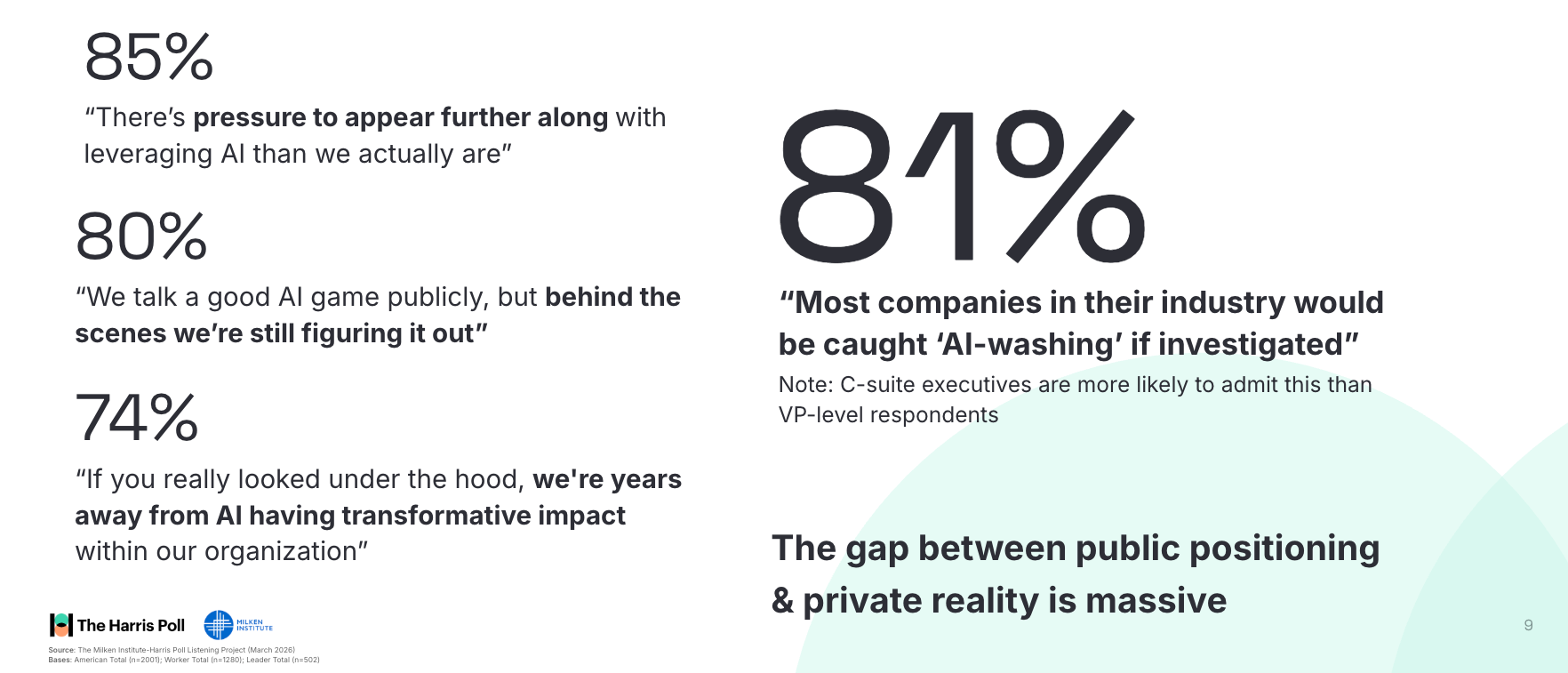
This is the part of the data that will be talked about at cocktail parties and board meetings for the next year. When we asked business leaders, confidentially, about their AI progress, they got honest and majorities of them admitted their companies and industries project AI confidence and transition but there is still a long way to go.
Read that again. Eight in ten leaders admit that the AI revolution their companies are publicly championing is mostly theater. C-suite executives are even more likely to admit this than VP-level respondents. The higher you go, the more honest the confession.
But before you judge them, consider whether they have a choice. Leaders right now face a market that punishes hesitation and rewards AI posturing. The system is demanding the performance. The leaders are just delivering it
Workers ask: “Am I Training My Replacement?”
While leaders are performing progress, workers are processing fear. And their fear has a very specific shape.
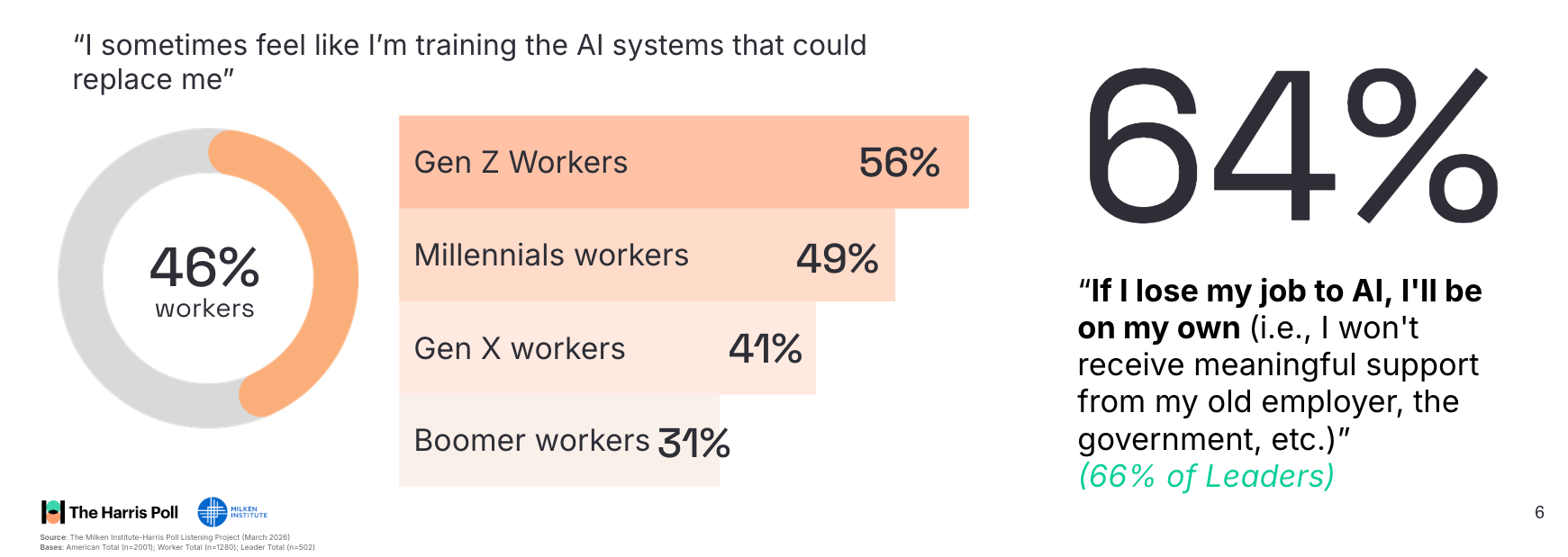
Nearly half of American workers feel like they’re training the AI systems that could replace them. More than half of the youngest workers in America go to work every day suspecting they’re building the tool that makes them obsolete.
And 64% believe that if they lose their job to AI, they’ll be completely on their own — no meaningful support from their employer, the government, anyone. Here’s the kicker: 66% of leaders agree with them. Even leadership knows there’s no safety net in America.
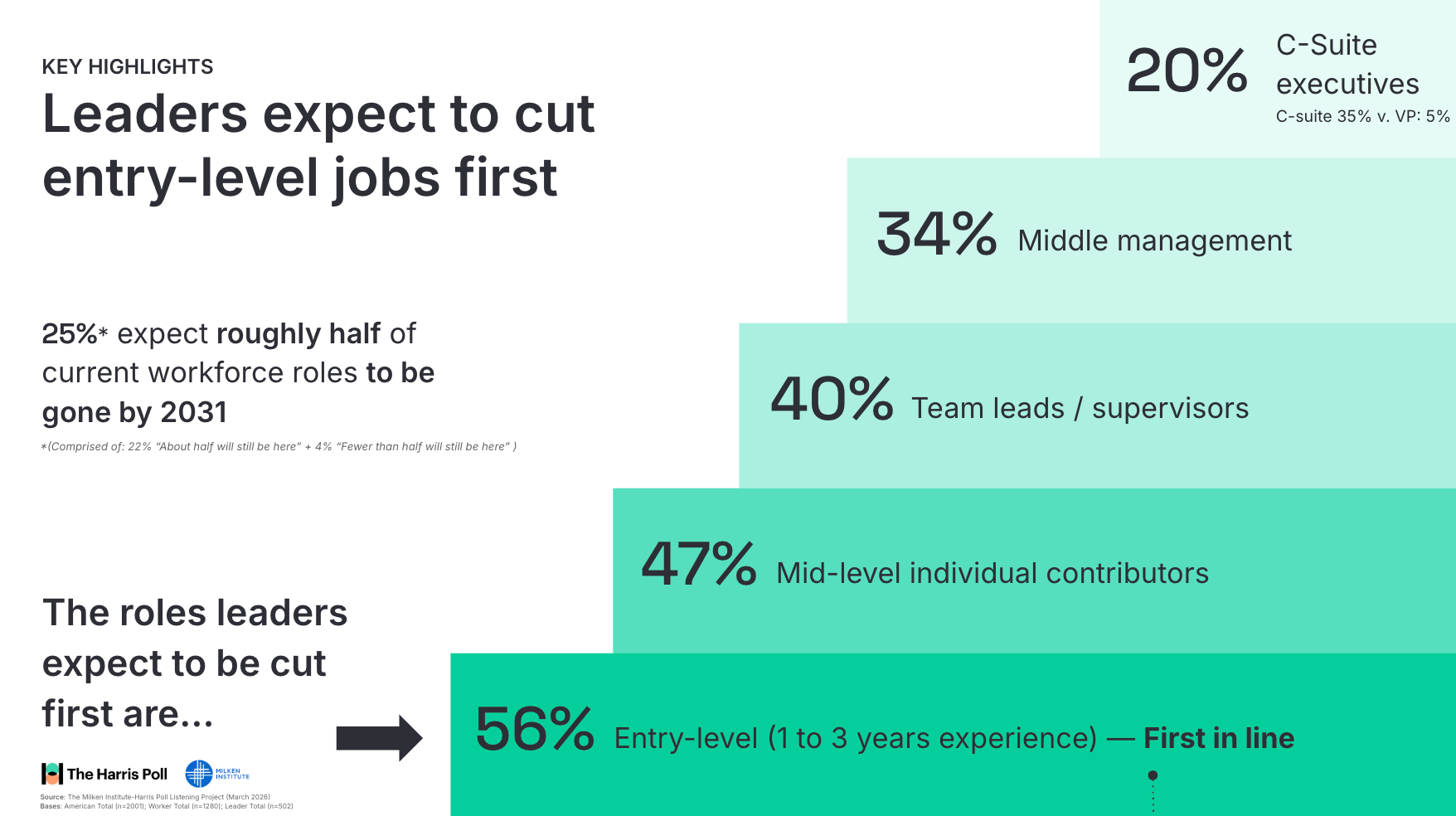
Meanwhile, 56% of leaders expect entry-level roles to be the first cut. The very people we keep telling to “upskill” and “lean into AI” are the ones executives plan to eliminate first. And 25% of leaders expect roughly half of current workforce roles to be gone by 2031. We’re not talking about a distant future. We’re talking about five years.
The New York Times put a name to it last week: “Silicon Valley Is Bracing for a Permanent Underclass.” Our data shows the underclass isn’t hypothetical — it’s already forming in the 41-point optimism gap between the people building AI and the people being displaced by it.
We’re not talking about a distant future. We’re talking about three-five years.
Corporate America Is Ghosting Its Workers
AI is coming but we’re not going to talk about itwith you.
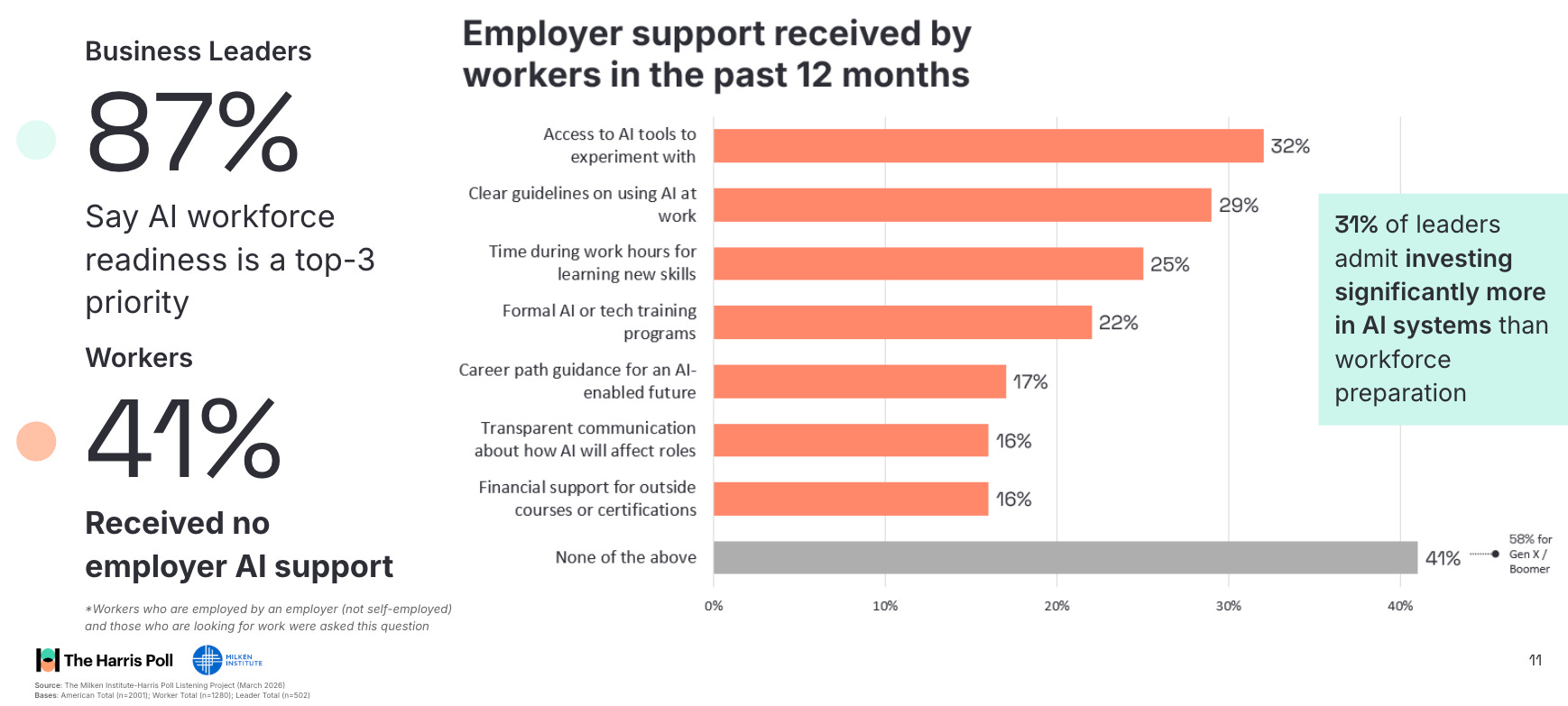
87% of business leaders say AI workforce readiness is a top-3 priority. Yet 41% of workers have received zero employer AI support in the past twelve months. Not insufficient support. Zero. For Gen X and Boomer workers, that number hits 58%.
When workers do get support, it’s thin: 32% received access to AI tools to experiment with. 22% got formal training. Only 16% received transparent communication about how AI will affect their roles. And nearly a third of leaders admit they’re investing significantly more in AI systems than in preparing their workforce to work alongside them.
That’s not a training gap. That’s abandonment dressed up in a strategy deck.
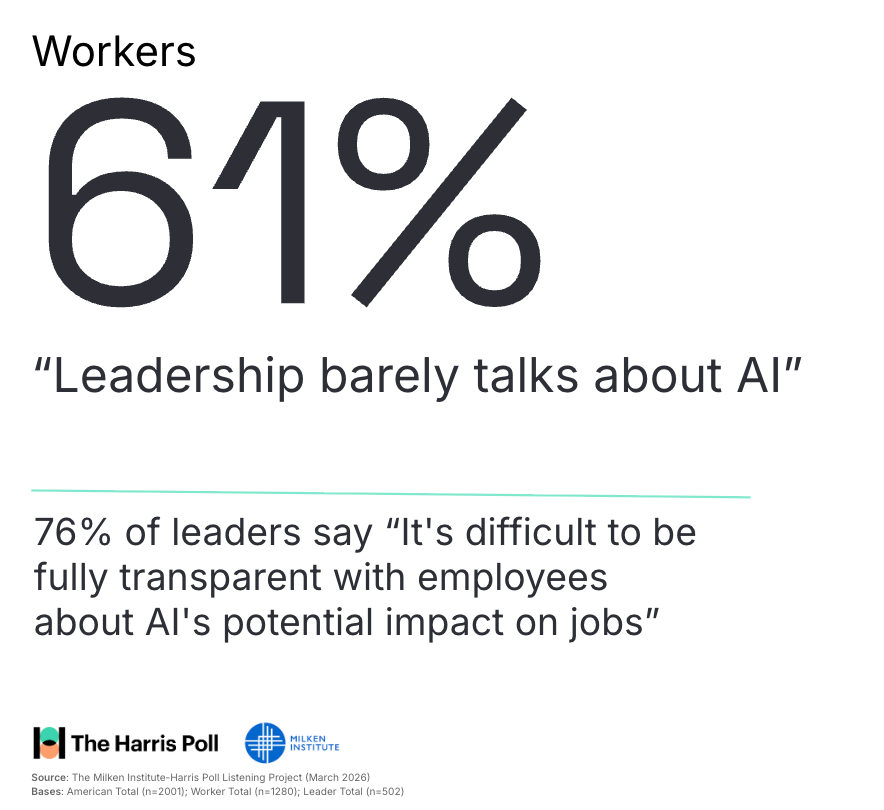
Meanwhile, American workers say leadership barely talks about AI at all. And leaders admit it’s difficult to be fully transparent with employees about AI’s potential impact on jobs. So leadership knows AI is coming for roles, knows workers are afraid, and is choosing silence. And in that silence, workers are writing their own narrative about what’s coming and it’s darker than reality.
The Most Bipartisan Issue in America That Nobody Is Talking About
Here’s where the story turns. And this is the part I didn’t expect.
In the most politically divided era in modern American history, AI workforce readiness has quietly become perhaps the most bipartisan issue in the country.
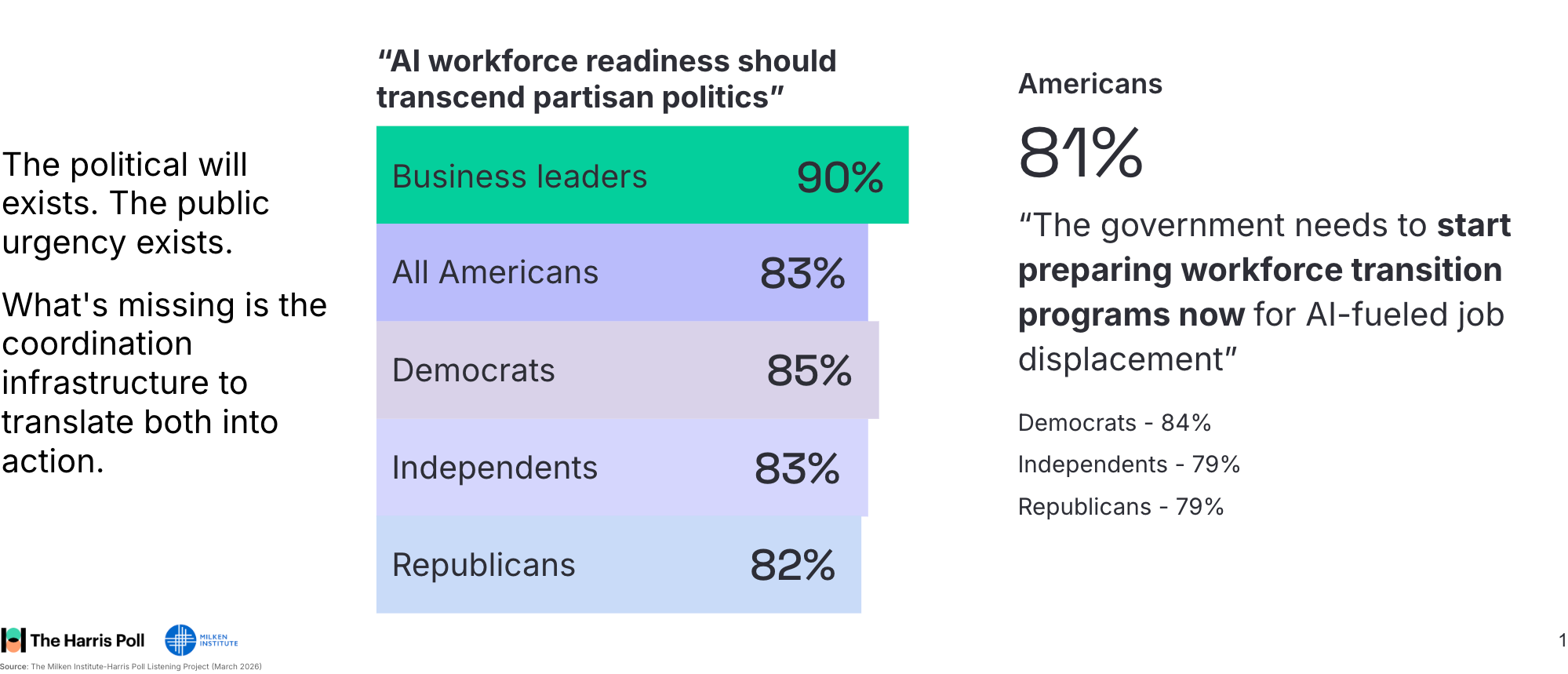
Americans, Republicans, Independents, and Democrats — agree that AI workforce readiness should transcend partisan politics.
In a country that can’t agree on anything, we found 83% consensus across party lines.
81% of Americans believe the government needs to start preparing workforce transition programs now. And when we tested specific policies — portable benefits, advance notice requirements, mandatory impact assessments, government-funded community college training, tax incentives, wage insurance — every single one cleared 57%+ support from workers and 82%+ from leaders (see full research here starting slide 27).
Every. Single. One.
But here’s the deepest layer: leaders personally support these policies at 82% to 88%. When we asked which ones their companies are actually participating in? The numbers crater to 21% to 45%. The conviction is individual. The inaction is institutional. Without coordination, nobody moves first.
The political will exists. The public urgency exists. What’s missing is the coordination infrastructure to translate consensus into action.
Workers Haven’t Given Up. That’s the Window.
Here’s what gives me hope: 69% of workers still believe AI can create more opportunities than it eliminates — if we get the approach right.
Workers aren’t anti-AI. They’re anti-abandonment.
Two-thirds would enroll in a government-sponsored AI retraining program if they lost their job.
39% would switch to a completely different industry.
34% would accept a lower-paying job if wage insurance covered the gap.
25% would take a job with less prestige or status (especially younger Americans)
They’re willing to move. They’re asking for a bridge.
And some companies are building one. Walmart is committing to AI-train all 2.1 million of its employees — from tech staff to in-store greeters — calling it “unfortunate” that other companies are slashing workforces in AI’s name. IBM is tripling its entry-level hiring, betting that gutting junior roles now creates a seniority cliff five to ten years out. IKEA retrained its customer service workers to become interior design advisors instead of replacing them. These aren’t charity projects. They’re bets that investing in humans is a better long-term strategy than discarding them.
The generational story matters here too. Gen X workers — the ones who lived through the dot-com bust, the financial crisis, the hollowing out of manufacturing — are the most skeptical. 57% say they need guaranteed income during training before they’d participating in AI transitional training programs. They’ve heard the “retraining” promise before. They want receipts.
Gen Z is the most willing to take a pay cut (42%) and the most likely to feel they’re training their replacement (56%). Simultaneously the most adaptive and the most anxious. They’ll move, but they need to see the system won’t leave them behind.
What This Means for Business Leaders
The window is still open, but it won’t stay open.
Break the silence. Workers aren’t asking for certainty, they know you don’t have it. Tell them what you know, what you don’t, and that you’re figuring it out too. In the vacuum, they’re writing their own story about what’s coming. It’s darker than reality.
Close the gap. Walmart is training 2.1 million people. IBM is tripling entry-level hiring. If you’re spending on AI systems but not on the humans alongside them, you’re building a house with no foundation.
Use the consensus. 83% of America agrees. 90% of leaders agree. The companies that step into that space publicly — supporting portable benefits, advance notice, coordinated transition — will earn a kind of trust no campaign can buy.
The Bottom Line
We found something rare in this research: genuine consensus. In a country tearing itself apart politically, 83% of Americans across party lines agree that preparing the workforce for AI should transcend politics. Workers and leaders agree on the policies. The public urgency exists. The political will exists.
What’s missing is the coordination infrastructure and the courage to move first.
As we said when we closed the presentation at Milken yesterday: The consensus exists. The window is open. The only question is who’s driving.
I’ll be writing more about this in the coming weeks as we dig deeper. If you want to explore how these findings apply to your business or sector, reach out.
This one matters.
Big shout out to Danielle Sumerlin and Jacklyn Cooney for leading this research with me. _________________________________________________________________________
Thanks for reading The Next Big Think!! Subscribe for free to receive new posts and support my work.
Curiosity is contagious; if you like this newsletter, please share it!!
Penned by Libby Rodney and Abbey Lunney, founders of the Thought Leadership + Futures Group at The Harris Poll.